Why "just call me if something happens" is risky when you live alone: safety check-ins for one-person households
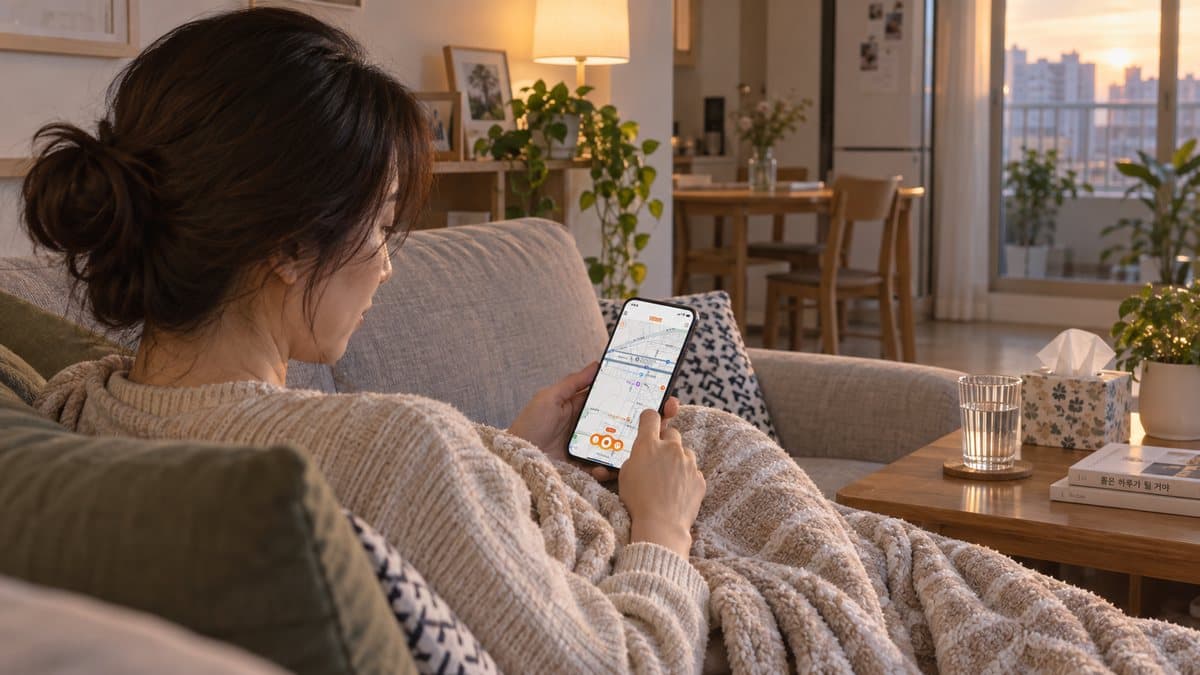
One of the things you hear most often when you live alone is "call me if anything happens."
But if you suddenly collapse, cannot move easily, or cannot find your phone, the act of calling is itself hard to do.
What matters for safety in a one-person household is not having someone watching every moment — it is shortening the time nobody knows something is different.
1. Rather than sharing location all day, set the times that need checking
Living alone does not mean showing your family your location 24 hours a day.
It is more realistic to mark out the situations that need a safety check, like these:
- Walking home alone late at night
- Being alone while unwell
- A stranger visiting your home
- Exercising, hiking or running alone
- Travelling or working away alone for a few days
Situational check-ins balance privacy and safety more easily than constant monitoring.
2. Decide in advance when "not answering" becomes something to check
If you are someone who is normally slow to read messages, a few minutes without an answer is not cause for worry.
Set the standard with family or someone close.
For example: "If I haven't messaged by 11pm to say I'm home, call once," or "On a day I'm unwell, check in two hours later."
The point is not how often you are in contact, but having a standard for noticing that something is different from usual.
3. Do not keep your emergency contacts only inside your phone
In case your phone dies or is locked, it is worth keeping emergency contact details separately.
Note down the numbers you would need — family, the clinic you usually go to, your building's management office — and set up your phone's emergency contacts and medical information features to the extent that is useful to you.
4. Keep your phone and your watch within reach, even at home
It is common to move into the bathroom, onto the balcony, or onto the stairs — places where you could fall — and leave your phone in another room.
If you spend long stretches alone, it is worth treating your charging habits and where your devices are as part of the safety routine too.
If you use a smartwatch, you can look at the heart-rate and fall-related features on supported devices — but a consumer wearable does not accurately detect every emergency, and does not diagnose illness.
5. On days you are unwell, raise the level of check-in
There is no need to manage it exactly the same as usual.
If you have genuine emergency symptoms — a high fever, severe dizziness, chest pain, difficulty breathing — do not rely on an app; get help from the emergency services or a medical provider.
But if you are resting alone, it is worth telling a close relative or friend how you are and where you are, and asking them to check in after a set time.
6. Run VAZOOM guard mode in advance for the times you need it
VAZOOM is a personal-safety app: you set the time that needs watching, guard mode runs for it, and if you cannot answer the safety check it is designed to send an alert and your location to the guardians you registered.
In the current supported range the safety-check flow can draw on a missed safety check, a wrong entry of the image passcode you set, your phone's battery state, and heart-rate-related conditions on supported smartwatches; you can register up to three guardians.
Living alone, it suits using guard mode only for the stretches that need watching — a late walk home, exercising alone, hours when you are worried about how you feel.
7. Decide what your guardian does when an alert arrives
"An alert came" is not the end of it.
Agree the order in advance with your guardian:
- Check how you are by call or message
- If there is no answer, look at the location and the last situation that was sent
- If needed, ask a nearby relative or a building manager to check
- If a real emergency is suspected, contact the emergency services
VAZOOM is not an emergency service that reports to police, fire or medical services for you.
Safety when you live alone is about building a structure that connects, not surveillance
The appeal of living alone is independence and freedom. You do not have to give all of that up for safety.
Try preparing it this way: live as you do, and turn on check-ins and the link to your guardian only for the hours when risk rises.
FAQ
Q. Does someone living alone have to keep a location-sharing app on at all times?
A. Not necessarily. You can agree with your family to use location and safety checks only at certain times or in certain situations.
Q. If I faint while alone, does VAZOOM call the emergency services automatically?
A. No. VAZOOM is not an automatic emergency-reporting service. It supports safety checks and guardian alerts; a real emergency needs help from the emergency services.
Q. With a smartwatch, can someone living alone detect every emergency?
A. No. Wearable features vary with the device, the settings and how it is worn, and they do not detect every accident or condition.