Safety check-ins for lone workers, without messaging "I'm off" every single day
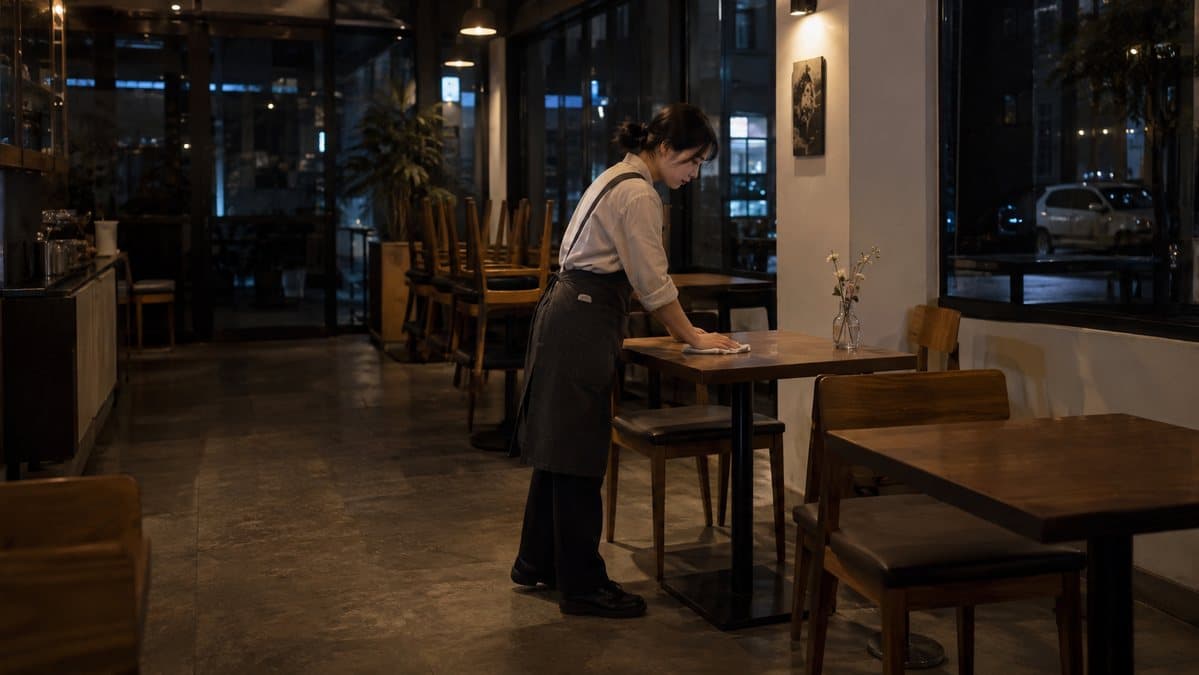
"Message me when you're done" is a common arrangement for anyone who closes a shop alone, stays on site alone, or works single-handed away from base.
The trouble is that on a busy day you can forget to send it — and if something has actually happened, you cannot send it at all.
Safety for lone working is better treated as a system that also settles what happens when no message arrives, rather than something left to whoever is good at staying in touch.
1. First, work out exactly when someone is working alone
It is not only people who work alone all day who count as lone workers.
- Arriving alone before opening
- Staying behind alone after closing
- Going alone into a store room, a basement, or an outdoor site
- Travelling alone in unfamiliar places on a work trip
- Meeting a customer or an outside visitor one to one
Often only part of the day is actually lone working.
Marking out those stretches first is what lets you decide which check-ins you need.
2. Set the check-in interval according to the risk
The UK HSE's guidance on lone working sets out how an employer keeps in touch with a lone worker, and checks in at pre-agreed intervals where that is needed.
Not every job needs a check every ten minutes.
Ordinary office work may be fine with a start and end check-in; work in an isolated place, or with hazards present, may need shorter intervals or additional checks.
Whichever country you operate in, the applicable occupational safety law, the sector's own safety standards and your national safety authority's guidance come first. Use guidance from elsewhere as a reference when designing check-ins.
3. Settle what happens after a given number of minutes with no contact
What matters more than the check-in is the response when it does not arrive.
For example:
- First: call and message
- Second: check with the site manager or a colleague
- Third: ask someone who can get to the site to check
- If there is a real possibility of an accident, contact the emergency services
You can set it out in stages like that.
You also need a standard for telling "we cannot reach them" apart from "we suspect an accident."
4. Do not build your safety arrangements on staff members' personal messaging apps
If workplace safety rests on individual conscientiousness alone, things get missed.
Write down at the workplace level who is working alone, when they are expected to finish, who checks if there is no word, and which numbers to call if something happens.
High-risk work in particular is not covered by a general safety app. Permits to work, protective equipment, training, supervision and emergency response — the legal and occupational safety framework comes first.
5. Treat timer-based guard mode as an extra safety net
VAZOOM is a personal-safety app: you set in advance the stretch of time you want watched, guard mode runs for it, and if you do not answer the safety check it is designed to send an alert and your location to the guardians you registered.
Setting guard mode to the expected length of the job before you start working alone builds a safety-check flow, instead of relying on remembering "I must message when I finish."
In the current supported range it can draw on a missed safety check, a wrong entry of the image passcode you set, your phone's battery state, and heart-rate-related conditions on supported smartwatches; you can register up to three guardians.
6. Keep the workplace system and the personal safety app in separate roles
VAZOOM does not replace an occupational safety management system or the safety measures required by law.
Employers have to meet their risk assessment, safety training, necessary supervision, emergency response plan and the relevant legislation separately.
A personal safety app sits on top of that, as an extra tool for noticing sooner when contact has been lost.
7. Turn the end-of-shift check-in into something that does not depend on memory
Sending a "finished for today" message is not a bad method in itself.
But any procedure a person has to remember every day will eventually be missed.
Set the start time, the expected finish, the check-in points and who responds to a missed check-in, and turn it into a routine that repeats.
FAQ
Q. If I work alone, do I have to make contact at fixed intervals no matter what?
A. It depends on the risk of the work and the workplace's own standards. What matters is setting a suitable checking method and interval on the basis of a risk assessment.
Q. Can we use VAZOOM as the company's occupational safety system?
A. It can be used as a tool that supports personal safety, but it does not replace legally required occupational safety measures or an employer's duties. A workplace needs its own safety management framework.
Q. If there is no answer during a shift, should we call the emergency services straight away?
A. It depends on the situation and the level of risk. Build a staged checking procedure in advance, and if an accident is a real possibility or the urgency is high, get help from the official emergency services.